All posts by cinser

Tsunami Evacuation Route

Tsunami

Photo taken in Alaska by Tawnya McDonald

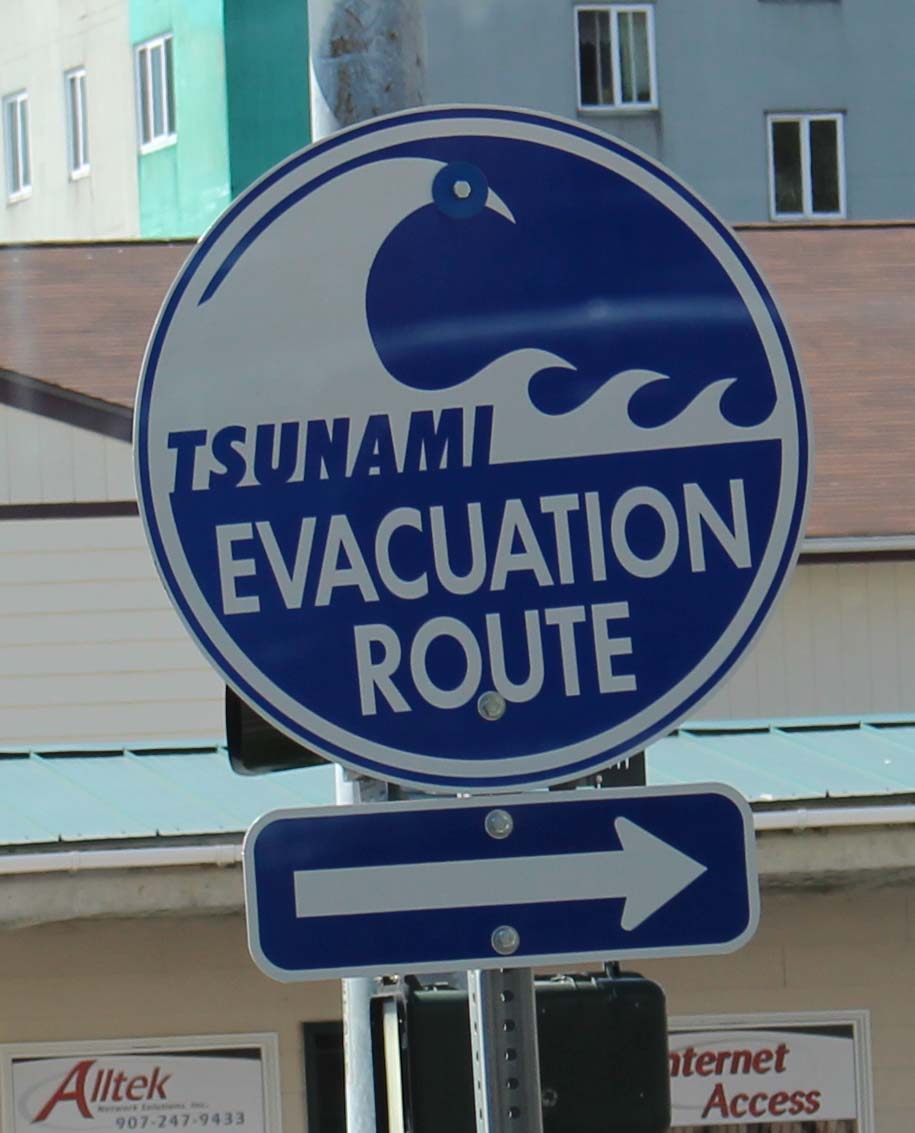
We often wonder how people live peacefully in an area with a high likelihood of natural disasters. Yet we all face the possibility of disasters every day. Some of us admit the potential of catastrophic life occurrences, some ignore them, and others fixate on them. We may choose to live in what we believe is a safe environment, one usually devoid of floods, earthquakes, tsunamis, or hurricanes, but the potential always exists for something to go wrong, for things to not be the way we wish they were. We are not in charge of the elements of our lives be they geological or personal. What we can choose is how we live each moment until things explode, implode, or not. Will we hunker in anticipatory fright? Will we stockpile self-selected or fanatically-recommended provisions? Rail against the unfairness of life? Fear what has not yet transpired? Mourn what we still possess? Or, will we choose to savor and celebrate our current steps in the dance of life?


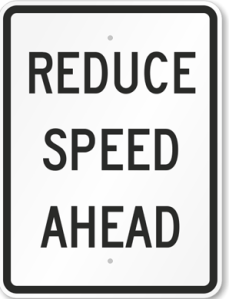
Reduce Speed Ahead

Screen Shot 2015-04-28 at 10.43.28 PM

Sometimes we move too fast. We’re in a hurry. Maybe we don’t know if we can get where we’re trying to go. We’re unsure so we go extra fast ignoring everything around us. Full speed ahead, eyes on the prize. Isn’t that what they tell us to do? Isn’t that what we value most, making up our mind and going for it? What about the people we’re plowing through or ignoring in our hurry to get where we want to be? Or think we have to be. Or think others expect us to be. Or are afraid not to be. What about the scenery? Not the smell the roses kind, but the maybe we should have taken a turn back there kind. And what about our breath? Has it grown stale gripped tightly in our throats during our mad dash? What about our soul? How could we have rushed off without it? What will we say to it when it catches up to us? How can we be ourselves without it? Pause people. This time look. See. Notice. Choose wisely. Slowly. With care.

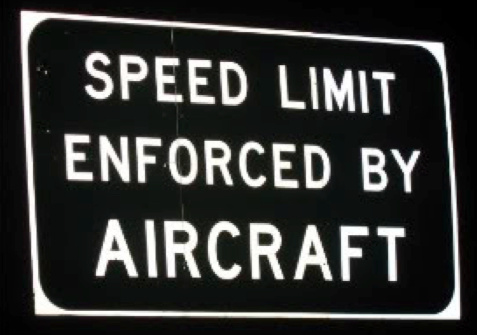
Speed Limit Enforced by Aircraft

Screen Shot 2015-04-02 at 10.26.15 AM


Do they shoot you if you go too fast? What else could the sign mean? It’s poorly worded and yet we are so quick to jump to the worst possible meaning. This happens all the time. Whenever words are involved. Whenever the stakes are high or appear to be high. We aren’t sure what the words we are hearing mean, so we choose the worst-case scenario. The darkest, scariest, oh-God-not-that meaning we can imagine. Why do we do this? Is it to protect ourselves from being blindsided by something terrible when we choose to hope for the best? Do these types of situations let lose other fears and dormant out-of-control feelings we thought were securely shackled and shoved deeply into the basements of our souls? And then we laugh. As if to say, no one would shoot at us from planes. That’s just silly. Ridiculous even. We hope it is. We agree with a shrug and a nod, to label this possibility, this horror story in the making as something that would never happen in our world. Our safe, predictable world. We tell each other this is what is true. We almost believe it.

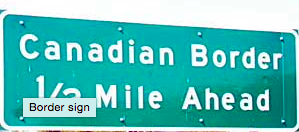
Border Crossing

Border

Many of us are skilled at drawing borders to keep others in line. We warn them not to cross into forbidden territory. We convince ourselves that those who don’t respect our boundaries, don’t respect us either. We become nervous when they begin to approach our carefully drawn borders. We become enraged when they dare to cross them. Our borders are constructed of don’ts. Don’t ignore me. Don’t make fun of what I think. Don’t treat me as less important than you. Don’t look at me with that judgmental glint in your eye. Don’t. Don’t. Don’t.

Perhaps we should stop drawing lines we fear others might cross and instead determine boundaries to keep ourselves out of the territories we’d rather not inhabit. See this border I’ve drawn for myself? It goes everywhere with me. Inside my border is truth and authenticity. Inside is the choice to acknowledge fear and the refusal to let it rule my world. You can come and visit me anytime. I won’t fight to keep you out. I won’t argue about where you should be. I’ll simply continue to live and examine my life, and perfect the shape of my world as my inner sight improves.

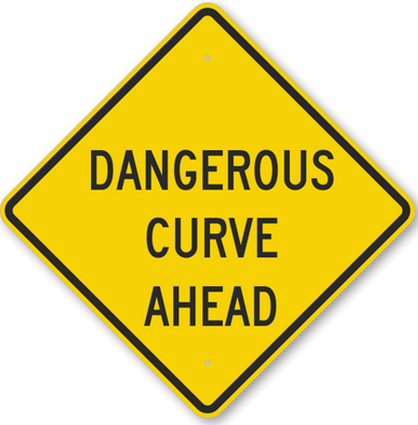
Dangerous Curve Ahead

Screen Shot 2015-01-12 at 11.24.46 PM

We can plan for what we think might come next or panic about what we fear will be visited upon our lives. We can even choose to do both. But if our focus and our energies rush ahead, how can we steer through our current terrain?

What will we miss when we refuse to acknowledge the joys and sorrows currently surrounding us?

The future cries out for our plans. Small wisdoms hidden in our fears yearn for consideration. Our lives beg to be lived.

Baggage Claim

Baggage Claim

We all travel with emotional baggage. It’s impossible to get rid of it. It becomes part of who we are. It is however, possible to learn to recognize it and to become capable of claiming it more quickly. It is even possible to learn to pack lighter, to end up with a few, small-sized pieces of matching luggage. If you work diligently and reflect honestly you might even be capable of going through life with a single carryon bag. But that bag can still wreck havoc in your life if you refuse to claim it as your own.

Our baggage shouldn’t be surprising to us. We act out its contents of fears and anxieties in a familiar fashion again and again. Those who love us or who have come to be annoyed by us could surely tell us the symptoms we display as a result of lugging our particular baggage through life. But we need to recognize more than just these symptoms. We need to rifle through the contents and identify the fears and anxieties hiding inside. We must become so familiar with them that we will be able to recognize them no matter what form they choose to take in our lives. Eventually we need to reflect and intentionally choose how we want to respond the next time our baggage gets jostled.

Most of us respond in an automatic manner to protect ourselves from the fears and anxieties packed inside our baggage. Locking them in doesn’t make them go away; in fact, it makes them frantic to escape. Sometimes, it can take as long as a year or two for us to recognize that one of these unfortunate kneejerk responses was a bad choice. We finally stop vehemently defending it and realize we allowed ourselves, once again, to be negatively influenced by the dark fears we have locked inside of our baggage.

As we begin to reflect on the choices we make and attempt to be more intentional, it may eventually take only a few months after the fact for us to recognize we’ve let our baggage spill into our lives once again. Then hopefully, we’ll start to notice our own patterns of behavior and begin to self-correct mere weeks or days after a baggage-spilling incident. Finally, one magical day, we’ll open our mouth to speak, but before we do, we’ll recognize our baggage spinning on the baggage claim carousal in our minds and choose to refrain from letting our baggage dictate the course of our lives. Instead, we’ll begin to use a different compass, one that does more than simply point us away from our fears. One that focuses on a direction that takes us toward a desired destination.


Emergency

emergency

I passed an emergency phone as I walked home. The kind that sits on a pole outside and usually is equipped with a flashing blue light. It’s understood that it should only be used in the case of an actual emergency. But who decides what is emergency worthy? You hear people say, “It wasn’t a real emergency.” This implies a hierarchy of emergencies. They judge any non-life-threatening situation as something less than an emergency. But what about life-altering situations? What about situations that leave the kind of mental residue that takes up residence for the rest of your life? And what about terror? If a young girl used the emergency phone because she was terrified but thank-God-incorrect of her assessment of the situation, would she be forced to sit through a lecture about the proper use of said phones? And what if my idea of excitement is your definition of emergency? If you’re scared but not in a cookie-cutter-just-like-the-rest-of-us, predictable way, and you ask for help, you’ll probably get the help you seek, but you’ll also get something else – a side order of why-can’t-you-get-with-the-program and be like the rest of us? It is the gift that keeps on giving.


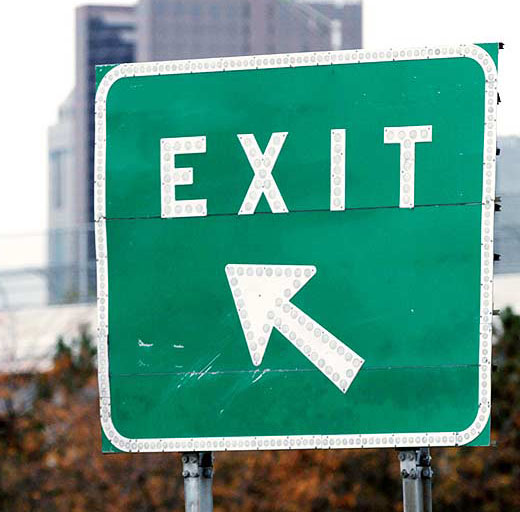
Exit

sign-ninjas_1

            Exit signs are suggestions, not commands. You get to choose whether or not you want to exit here and now, or later, somewhere else. We don’t notice the exit signs in buildings if we already know how to get out, if we’ve already decided when we want to leave. But on the highway, we might struggle to find a particular exit, the one we believe will take us where we want to go. We get tense. We stress out. We worry we’ll miss it. We act as if we only get one chance to find and take our desired exit. My dad used to tell me to relax. To remember that if I make a wrong turn, that most of the time I can make two lefts and get right back to where I started. Sometimes this is true. Other times life throws a cloverleaf-like confusion in my path and it isn’t. But I always make discoveries when I end up taking a different path than I intended. It really is about the journey. Sure, I want to get to where I’m going, but sometimes, I want to change my mind about where I want to end up. Sometimes, the journey helps me choose my destination instead of the other way around.

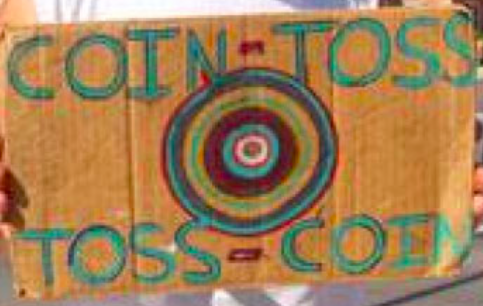
Homeless Signs

Screen Shot 2014-11-16 at 3.00.17 PM

            Many homeless people are becoming quite creative with their signage. The Coin Toss sign above is one example. The level of advertising acumen present varies, but the hope of grabbing your attention prevails whether you are invited to play a game or take part in an unnatural act. These messages also contain a bit of humor, and a vulnerability you won’t see in mainstream advertising. Sometimes the sign maker has merely copied another’s good idea, but sometimes, the sign you see is original. These signs are more than appeals. They are evidence of cleverly calculated communications crafted to reach a specific audience. They are also let us glimpse the minds and hearts of these fellow human beings.

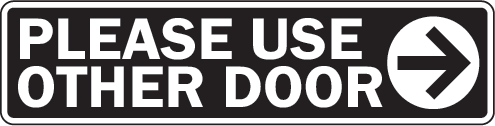
Please Use Other Door

G2062

            It’s obvious. You want me to use the other door. I can tell because this one is locked. Or maybe it’s not locked, but you still want me to use the other one. You don’t say why. It’s not a request. You expect me to obey, to automatically follow your directions. It’s not like it’s a big deal for me to use the door you want me to use. I can still get where I’m going. I admit I’d rather choose for myself. I am curious about why it’s so important to you to decide which thresholds I should be allowed to cross. Like I said, it’s no biggie for me to use this door. Unless…unless you’re screwing with me. Unless you don’t actually have a reason for wanting me to use this particular door. Unless you simply want to control what I do. If that’s the case, I’m going my own way.

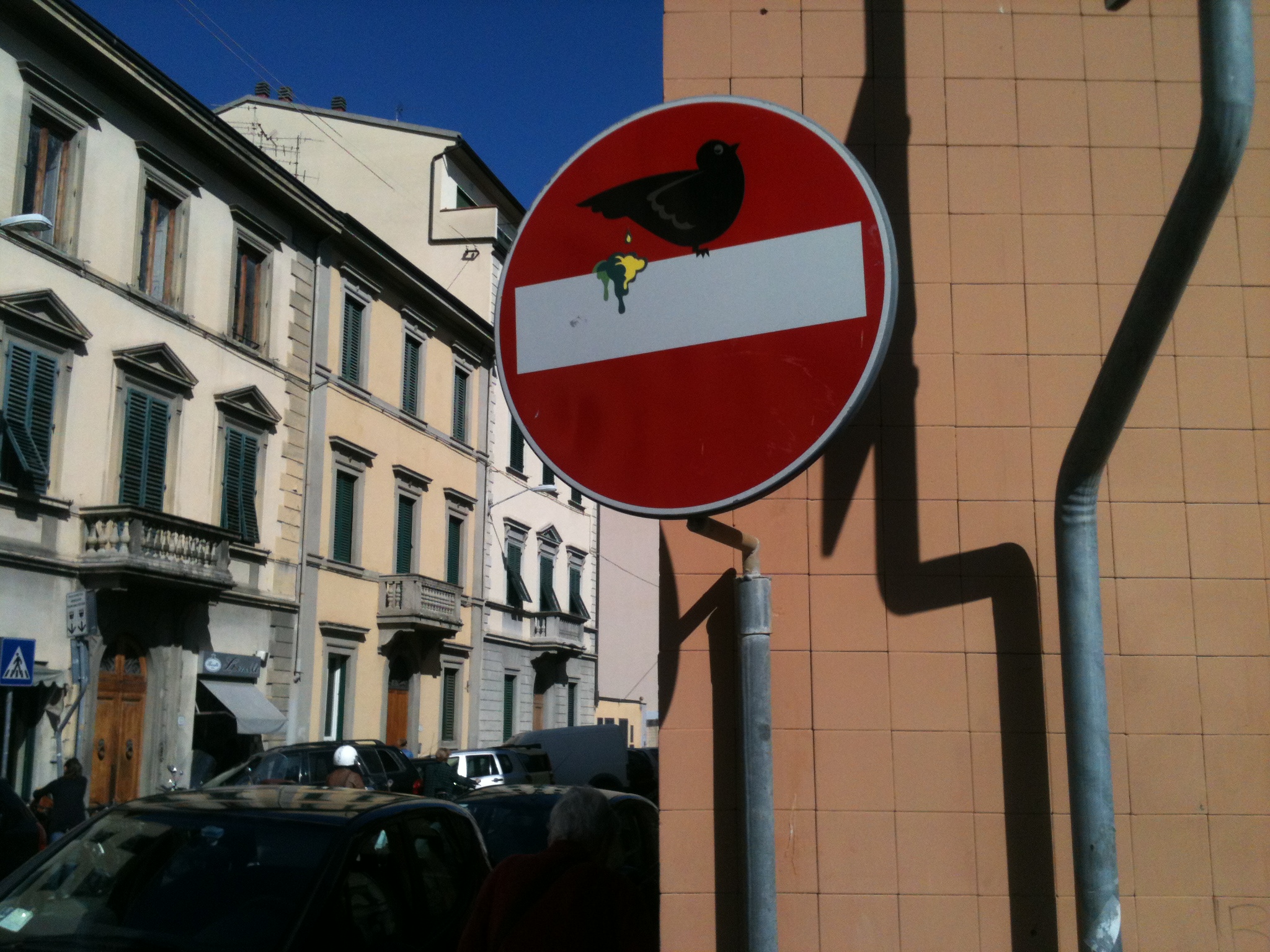
Altered No Entry

IMG_0515

IMG_0517

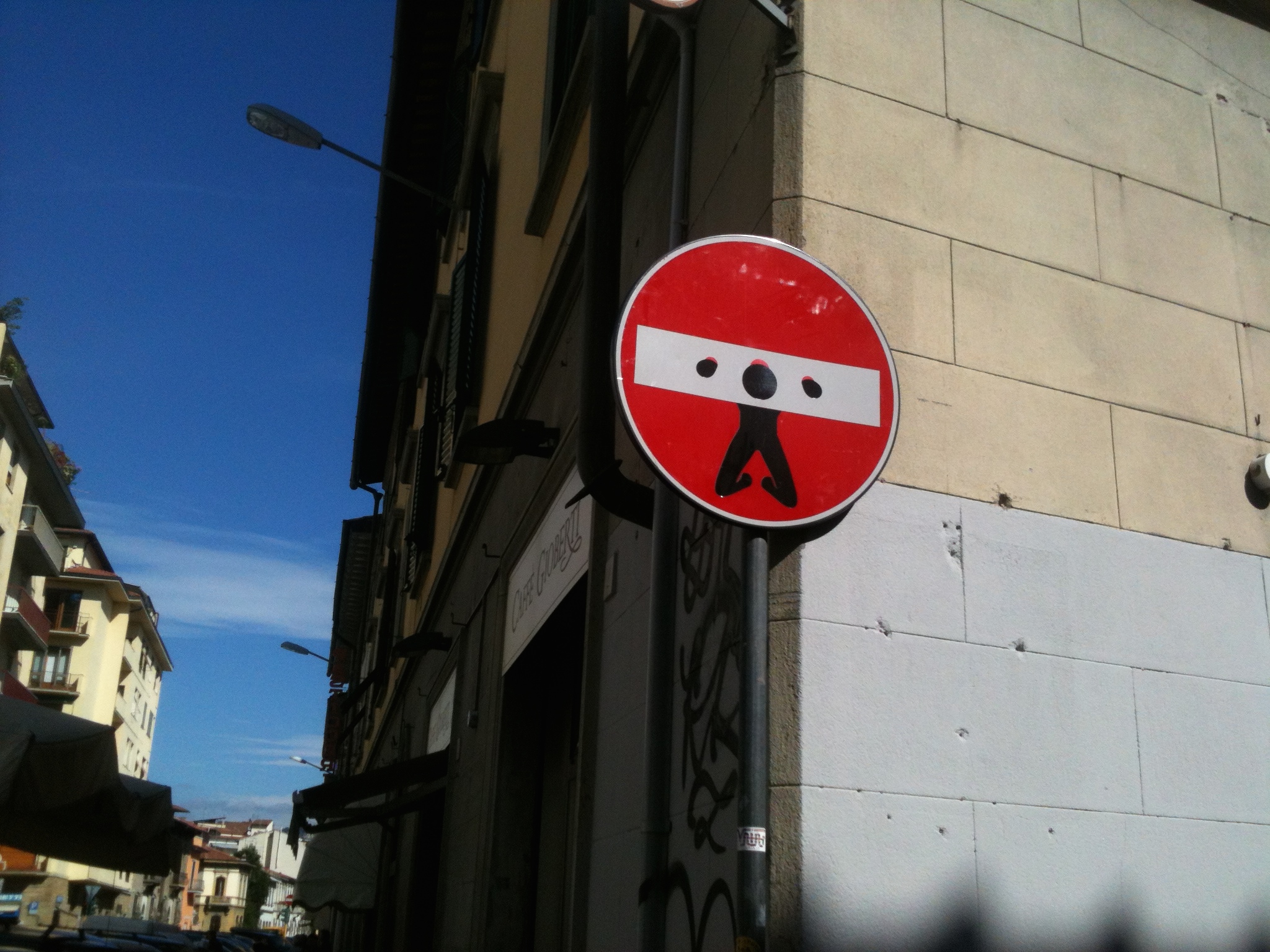
Last year, when I was in Florence, I saw the work of Clet Abraham. He is an artist who alters European traffic signs. He sites various reasons for doing this, many of which are aesthetic in nature, but he also claims these signs speak down to us. The two altered no entry signs shown here seem to point out a refusal to take these signs seriously and to express a feeling of being unwillingly forced into encountering them.

People give us signs of what they want us to do all the time. This often happens in an individual to individual manner. But sometimes, individuals give us signs of what they want us to do because they fear we won’t do what’s expected. More importantly, they seem to believe that if we go too far beyond what they and the group they belong to deem to be acceptable, that somehow, our authenticity becomes a rebellion and a revolt against this accepted way, which they of course wholeheartedly see as the right and only way.

These same people praise innovation but only when what is innovated can become a part of their paradigm. They see individualism not merely as the breath-in-breath-out practice of living authentically but rather as a call to arms to stamp out a wayward, confused member of the human race. Not to get all Ayn Rand on you but how smart can you truly be if you fear difference? How inclusive are you if your acceptance of diversity has a limited list?

Watch for Falling Rocks

rocks

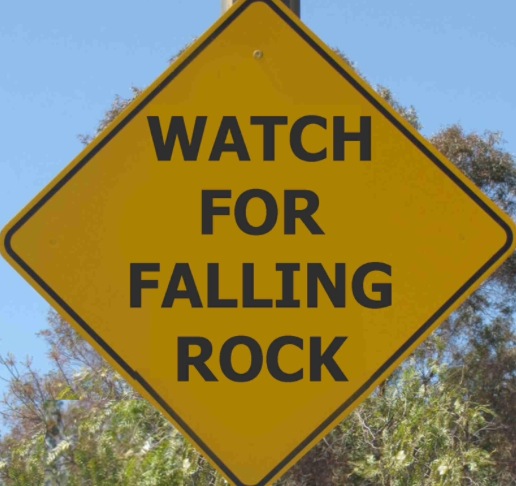
            My father, god rest his soul, and my dentist, god bless his gentle hands, each in their own way have taught me similar lessons about fear and anxiety. When I was a young girl riding in the passenger seat, up front, next to my dad, long before the dawn of airbags or seatbelts, I saw a ‘Watch For Falling Rocks’ sign on the side of the highway. I began to look up at the cliffs above the roadside. My dad asked me what I was looking for up in the air. I told him about the sign I had seen.

He explained that even though the rocks fell down from the cliffs above, what drivers need to be on the lookout for were rocks that had already fallen down onto the road. He said looking up in an attempt to protect yourself from what might become a danger to you could prevent you from noticing an obstacle or stumbling block already in your path.

My dentist phrased the same message in a slightly different way. I’m not afraid of pain; I’m afraid of not being able to breathe, or at least of feeling as if I can’t breathe. “Cinse,” my dentist said to me when I confessed that this was the reason I was so anxious, “stopping worrying about something that might not even happen. Everything’s fine right now.”

Yellow Light/Caution Sign

yellow light

Driver’s manuals tell us to stop at a yellow light unless we don’t have enough time to stop safely. Then and only then are we supposed to risk driving through. Most of us act more like the title character of the movie ‘Starman’ when we come to a yellow light. Starman, an alien, speeds through an intersection when the traffic light is yellow; the human in the car accuses him of not knowing how to drive. Starman say “I watched you very carefully. Red light stop, green light go, yellow light go very fast.”  So, even though we are supposed to stop,  many of us speed through instead.

How we respond to a sign or to another human telling us to be cautious, largely depends on our personality. Those with a tendency to be timid or overly cautious might slow down our forward motion or become frozen with fear when cautioned against a particular course of action. Others, wired to be daredevils or who adore tempting fate, might rush in hoping for a challenge.

Many different types of yellow lights or cautions are thrown at us in life. People frequently advise us to be careful. Sometimes their micro-expressions convey a judgment of our intended actions as foolhardy or dangerous. This might cause us to rethink our plans, but it could just as easily cause us to forge forward to prove them wrong or to spite them.

But why do people caution us in the first place? Sometimes they sincerely care about us and worry about our safety. But sometimes they are invested in our failure. Maybe they don’t want us to try so that there will be no hope of us succeeding. Maybe they’re not brave enough or don’t feel capable enough to try what we are planning to do. And, if they feel smarter or more accomplished than us, they might realize that their egos would have a difficult time accepting our success. Better to forestall the possibility of success with a well-placed word or two of caution.

Don’t be an idiot; listen to caution when’s it’s warranted. But don’t let others cause you to falter when you know you’re on the right path or are willing to find out if you are. That would be even more idiotic.

Starman quote: http://www.imdb.com/title/tt0088172/quotes


Buy Two Get One Free

 buy2get1free-massage-special

Imagine you need or want to buy something. It doesn’t really matter what it is. It could be anything. When you go to purchase it you discover there is a buy-two-get-one-free sale. Maybe you can easily afford to purchase two instead of one. Maybe you are going to need a second one of whatever this thing you are purchasing is sooner than later. But maybe not. Maybe you only need one. Or maybe you really don’t have the money to buy a second one right now. Maybe you think you’ll probably never use that third free one anyway. But it’s free. It doesn’t cost you anything. Wait, that’s not entirely accurate. First of all, you had to pay out twice as much money as you originally intended to spend. Yes, yes, I know, you are getting the second item for this unexpected outlay of money. It isn’t as if you’re actually paying any extra for the third item. The third item IS free. Again, not entirely accurate. Your choice to take advantage of this sale changed the amount of available cash you will have on hand. This might not be that big of deal to you. But here’s the thing, buying two to get one free when you only intended to get one is only a good thing if you really want three.

Don’t change your behavior because something seems to be free or seems to be something you should do based on what the prevailing view of a particular situation might be. Most people would tell you to go for the free item. But maybe, you should let your own wants, desires, and value system prevail no matter what offer is on the table. You get to make your own decisions. Don’t give your right to decide away. Not even to that little annoying voice in your head.

Merge

drivingtips_228123_600

My son gets annoyed when a car in front of us on the on-ramp of the highway comes to a complete stop instead of merging into traffic. He points out that the sign says merge not stop. That doesn’t keep quite a few drivers from braking or slowing to a crawl. Are they afraid? aggressive? hesitant? overly cautious? fool-hearty? oblivious?

Merging onto the highway requires the driver to accelerate into the flow of traffic without causing an accident. It is recommended that you increase your speed to match that of the traffic into which you are merging. In other words, the merging vehicle should be going the same speed as the stream of drivers on the highway. The goal is to become part of the flow, not to interrupt it or to become overwhelmed by it.

Where else do we attempt to merge in life? How good are we at maintaining the integrity of who we are when attempting to join a flow presented to us. Do we harm ourselves or others with our timidity or aggression? Why not choose to enter hopefully? Put a little joy in the passenger seat. Drive with purpose and intention. Even if you are afraid. You can always take the next off-ramp.

One Way Do Not Enter

Mdc784pT9

 While it’s true you aren’t supposed to go the wrong way, as in against traffic, on a one-way street, you are still permitted to enter as long as you choose a legal entry point. You can also enter where it tells you not to, but there will be consequences, including the possibility of bodily harm.

Many times our inner voice tells us not to enter. It might whisper a doubt or shout a warning. This can make us question our choice to enter. But the best response isn’t always to simply walk away. Sometimes our inner wisdom is telling us to go ahead, to move forward physically or mentally but to do it from a different entry point

Self Service

self service

If you are self-serving you do things that benefit yourself without thought or care about how your actions might inconvenience or harm others. Most people judge this to be undesirable, and yet we have a responsibility to care for ourselves, to not choose to be weak or victimized but rather brave and willing to build our confidence and abilities moment-by-moment, day-by-day. This not only benefits us and those in our most intimate spheres of interaction; it also benefits the larger community around us.

Self service isn’t about taking more than your due; it’s about taking responsibility for yourself. Take what you are due. Act on your dreams with self-awareness and self-confidence. Do not give into the self-serving demands of others that you should be selfless. Live your life true to yourself. Live your life in a manner that makes your self worthy to guide you.

Self Storage

self storage

We all lock so many parts of ourselves away. Perhaps it’s the self willing to speak up and disagree or the self who is willing to walk away from people and situations that tear us down and make us smaller. Maybe our bravest, most confident self is wrapped in bubble-wrap and tucked in the far, back, dark corner of the storage unit where we’ve put it to protect it from being labeled cocky or perhaps even ridiculous.

Herein lies the key to our storage facility – everything in it is something we ourselves have chosen to put there. Only we can unlock it. Only we can set our selves free.